


A Smart Building Isn’t Just Smart: It’s Sustainable
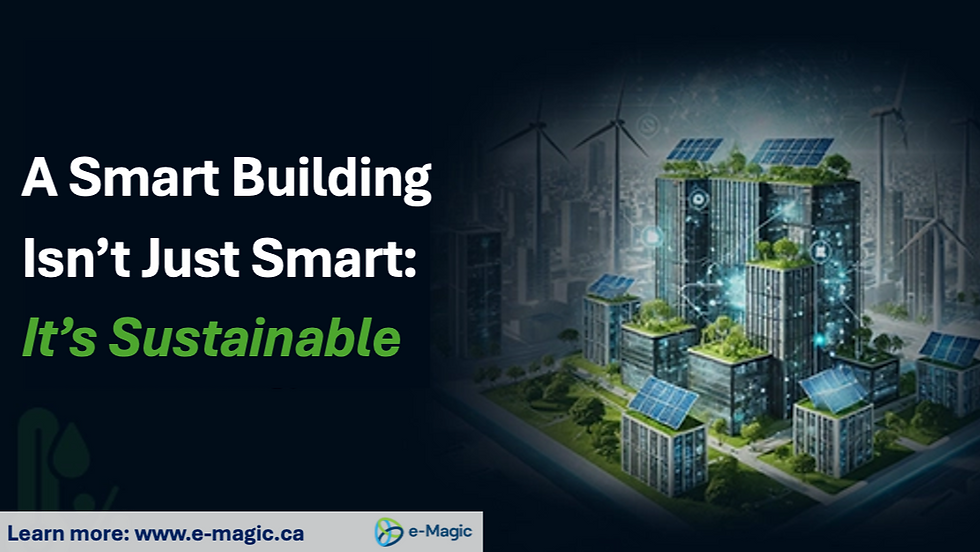
“Smart buildings aren't just full of tech. When done right, they’re full of sustainability outcomes.” This statement captures a new reality in the world of real estate: the smartest buildings are those that deliver comfort and efficiency for people while minimizing their impact on the planet. For context, buildings are a huge piece of the climate puzzle, accounting for about 39% of global energy-related carbon emissions. Making our buildings smarter isn’t just an exercise in adding gadgets; it’s a critical strategy to reduce that environmental footprint and improve occupants’ well-being.
Modern digital twin platforms provide facility managers with a unified “single pane of glass” view of building operations, consolidating data from HVAC, lighting, security, and other systems into one interface. This holistic perspective makes it easier to identify inefficiencies and optimize performance in real time. For example, e-Magic’s TwinWorX platform integrates telemetry from hundreds of devices into a 3D digital model of a building, where all systems can be monitored, visualized, and controlled together. Instead of juggling separate subsystems, operators have one comprehensive dashboard that gives them a high-level view of everything. This unified interface delivers actionable insights and decision-making intelligence across the facility. In short, a “single pane of glass” approach breaks down data silos and enables smarter decisions that benefit both the tenants and the environment.
Enhancing Tenant Comfort with Intelligent Control
For building owners and managers, keeping occupants happy and healthy is a top priority, especially since people now spend roughly 90% of their time indoors. A truly smart building uses technology to create a more comfortable and healthy indoor environment automatically. With the right sensors and analytics in place, the building can continuously fine-tune itself to serve its occupants.
TwinWorX, for instance, leverages real-time data and AI to maintain optimal indoor conditions for tenants. It monitors factors like temperature, humidity, and air quality, and adjusts heating, cooling, lighting, and ventilation based on occupancy patterns and even external weather changes. This means the building stays within comfortable ranges without constant manual intervention, and it avoids wasting energy by not “over-conditioning” spaces that aren’t in use.
Smart building platforms also contribute to healthier spaces. Continuous monitoring of indoor air quality ensures ventilation is increased when CO₂ or pollutant levels rise, maintaining healthy air for occupants. In the wake of a global pandemic, the emphasis on healthy buildings has never been higher. It’s no longer enough for buildings to be energy-efficient; they must also support occupant well-being. A unified smart building system can achieve both by responding to indoor environmental needs in real time. The result is happier, more productive tenants who enjoy consistent comfort and cleaner air, day in and day out.
Optimizing Energy and Sustainability Outcomes
The flip side of the smart building coin is environmental performance. All of the same integrated technology that keeps people comfortable is simultaneously driving significant efficiency gains behind the scenes. Smart buildings proactivelymanage energy use, often achieving substantial reductions in consumption and emissions. In fact, modern IoT-driven building systems can even enable facilities to reach net-zero carbon operations by optimizing how and when equipment runs.
Analytics play a key role here. By analyzing both real-time sensor readings and historical trends, a platform like TwinWorX can pinpoint where energy is being wasted and then take action. For example, the system might dim or switch off lights in areas with ample natural daylight, or shut down non-essential equipment during off-peak hours. Heating and cooling can likewise be intelligently scheduled, with setpoints adjusted to match actual usage patterns – if a conference room is empty in the afternoon, why over-cool it? Over time, the digital twin “learns” the building’s rhythms and finds opportunities to save energy that a human operator might miss. Additionally, predictive maintenance analytics detect when HVAC or other equipment is getting dirty or inefficient, so it can be tuned up or repaired before it drags down performance. Keeping equipment at peak efficiency means it uses less energy and lasts longer, which reduces waste (and saves money).
All of these measures add up to serious sustainability outcomes. One industry analysis found that smart building initiatives typically reduce energy consumption by around 10–15% on average, even as they improve occupant comfort. And many buildings are achieving far greater savings with advanced controls and AI optimization. TwinWorX and similar platforms directly translate these efficiencies into a smaller carbon footprint for the building. Every kilowatt-hour of electricity or therm of natural gas saved means fewer greenhouse gas emissions. In a world where every sector is racing to cut emissions, optimizing buildings is often the quickest win, and it doesn’t require sacrificing comfort or productivity to do so.
A Global Movement Toward Smarter, Greener Buildings
The convergence of smart tech and sustainability isn’t just a niche experiment; it’s fast becoming the new standard. Governments and industry leaders worldwide are recognizing that high-performance buildings are key to meeting climate goals. Policy is reinforcing this shift. For instance, the European Union’s updated Energy Performance of Buildings Directive will require all new buildings to be zero-emission by 2028. Similar moves are underway in countries like Japan and the United States, pushing the market toward more efficient, data-driven designs.
At the same time, the technology itself has matured dramatically. Gone are the days of manual tweaks to isolated building systems. Today, AI-driven algorithms can analyze a dizzying stream of sensor data and decide in fractions of a second how each piece of equipment should respond. The building essentially manages itself – continuously balancing energy use with comfort needs – as modern IoT platforms provide live analytics and even automatically adjust settings to improve sustainability. This is the power of a “single pane of glass” approach on a global scale: all data unified, all systems cooperating for maximum efficiency.
Crucially, this trend isn’t just about new construction. Retrofitting existing buildings with smart sensors and a platform like TwinWorX can unlock huge improvements in older facilities as well. Scalable IoT devices and cloud analytics can be layered onto legacy infrastructure to bring it into the smart era. From corporate office towers to hospitals to industrial sites, any facility can be made “smart” and green with the right strategy. It’s a transformation happening worldwide, driven by both visionary sustainability commitments and down-to-earth financial benefits. After all, reducing energy waste doesn’t just cut carbon; it directly lowers utility bills and operating costs, enhancing a building’s net operating income and overall value.
Conclusion: Where Smart Meets Sustainable
In the end, a smart building isn’t defined by how many sensors or dashboards it has. It’s defined by outcomes. The ultimate smart building is one that seamlessly blends intelligent technology with sustainability goals, delivering a superior experience for occupants and a lighter impact on the environment. Platforms like TwinWorX exemplify this balance: they bring every building system into harmony on one platform so nothing operates in isolation or ignorance of the bigger picture. The result is a building that can dynamically adjust to keep people comfortable, all while squeezing out energy waste and unnecessary carbon emissions.
This vision of a smart, sustainable building is quickly moving from innovative to indispensable. As organizations strive to meet ESG (environmental, social, and governance) targets and cities pursue climate resilience, the demand for these solutions is growing globally. It’s a rare win–win scenario: building occupants get a healthier, more comfortable space, and owners meet their sustainability benchmarks with lower operating costs to boot. Smart truly becomes sustainable. In other words, the smartest building isn’t just full of tech; it’s full of outcomes that matter.

